|
RFID & NFC Inlays and Transponders Description
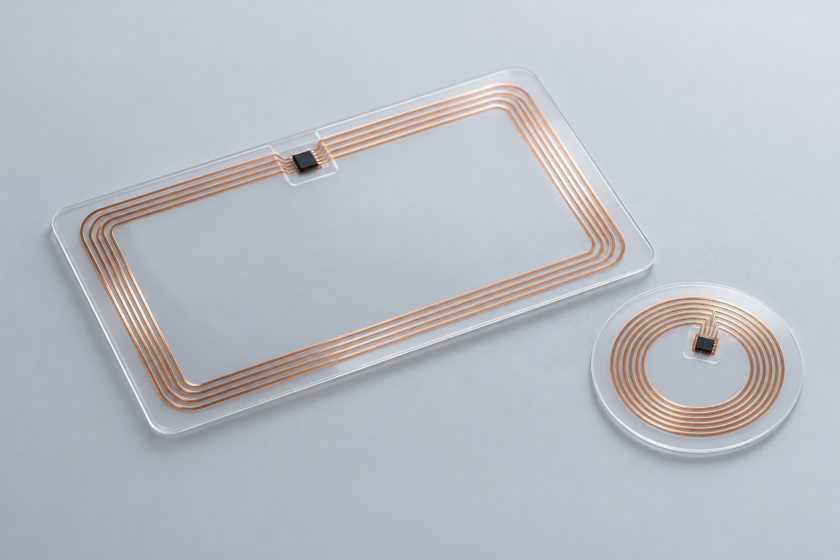
RFID and NFC products combine an integrated circuit with an antenna to enable contactless communication. Inlays can be incorporated into cards, labels or other finished products. The right choice depends on the operating frequency, protocol, chip functions and the environment in which the product will be used. Chip + antennaTreat the chip, antenna and communication protocol as a matched electronic assembly. Conversion formatCoordinate substrate, dimensions and conversion requirements with the finished card, label or tag. Real-world validationEvaluate the reader, orientation and surrounding materials in the intended installation. 01 / PRODUCT OVERVIEW Understand the product familyFrom inlay to finished productAn inlay is an electronic assembly rather than a complete end-use label or card. Review the substrate, antenna construction, chip position and conversion process when integrating an inlay into a finished product. Delivery and adhesive formats should be confirmed for the selected item. Typical application contextsContactless technology is used in access credentials, product identification, NFC interactions and tracking workflows. Required range, memory, data handling and security functions vary by application. Confirm that the selected chip and protocol are compatible with the intended reader or smartphone environment. Evaluate in the real installation environmentRead performance is affected by antenna and chip design, reader configuration, orientation, nearby materials and installation geometry. Test the selected product in its intended environment. A nominal read distance should not be treated as a guarantee for every installation. 02 / APPLICATION CONTEXTS Designed into a wider systemCredentials & accessContactless identification within a compatible reader and credential system; chip and protocol selection remain application specific. Product identificationIntegrate electronic identification into suitable labels, cards or tags and define the data required by the workflow. NFC interactionsFor compatible NFC configurations, review the intended smartphone interaction, data format and installation materials. 03 / CONFIGURATION GUIDE What to define before selection
05 / INTEGRATION CHECKLIST Move from requirements to evaluation01 Define the applicationIdentify the system, reader or device reference and the environment in which the product will operate. 02 Confirm the configurationReview the product drawing, electronic requirements, delivery form and any necessary application approvals. 03 Evaluate representative samplesAgree on sample quantity, integration conditions and acceptance checks before confirming the production configuration. 04 Prepare the order briefConfirm product reference, drawings, quantity, delivery schedule and any agreed inspection or personalization requirements. Product-specific review points
06 / COMMON QUESTIONS A clearer starting pointIs an inlay the same as a finished label or card?An inlay is an electronic assembly. A finished product may add printed layers, adhesive, a card body or other protection. Define the required delivery form and the conversion process. Will every RFID product work with a smartphone?No. Compatibility depends on the frequency, protocol, chip and smartphone capability. NFC-oriented applications require a compatible configuration and should be evaluated with the intended devices. What determines the reading distance?Antenna and chip characteristics, reader setup, orientation and nearby materials all influence communication. Validate the selected configuration in the real installation rather than relying on a universal distance figure. START A PRODUCT DISCUSSION Tell us what your application needs.Provide the application, required frequency and protocol, chip preference, antenna or label dimensions, installation materials, target reading conditions and quantity. Add drawings or photographs of the intended integration where useful. Contact HIC SMART →Original product-family illustration. Exact construction, specifications and availability depend on the selected product drawing and written configuration confirmation. |